
Demystifying Algorithm Complexity Analysis
In this article, we will look at algorithm complexity analysis and why it is the bread and staple of computer science and programmers alike.

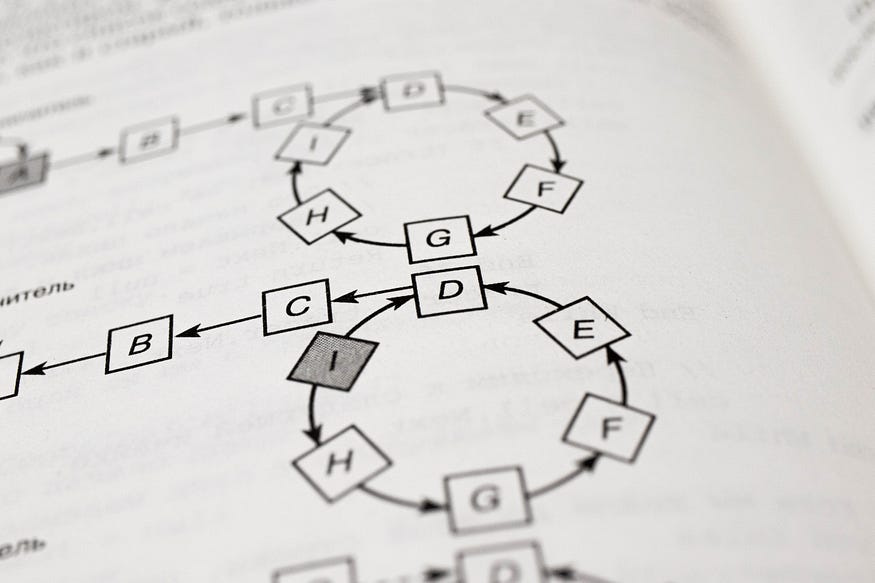
In the realm of computer science, one of the key factors in evaluating the quality and performance of algorithms is their complexity. Understanding the complexity of an algorithm provides valuable insights into its efficiency, scalability, and resource requirements. Analyzing the complexity allows us to make informed decisions when choosing or designing algorithms for solving problems. In this article, we will explore the process of analyzing algorithm complexity and shed light on the different techniques used for this purpose.
What is Algorithm Complexity Analysis?
Algorithm complexity analysis involves assessing the performance characteristics of an algorithm, primarily in terms of time and space requirements. It aims to provide an estimation of how an algorithm’s execution time or memory usage will grow as the size of the input increases. Complexity analysis plays a vital role in selecting the most suitable algorithm for a given problem, optimizing existing algorithms, and predicting their behavior in real-world scenarios.
Review
Time Complexity: The Big O Notation
Time complexity measures the amount of time an algorithm requires to run as a function of the input size. The most commonly used notation for time complexity is the Big O notation (O). Big O notation provides an upper bound on the growth rate of the algorithm’s running time. It describes how the algorithm’s performance scales with input size in the worst-case scenario.
For example, an algorithm with a time complexity of O(n) signifies that its running time grows linearly with the input size. As the input doubles, the algorithm’s running time also doubles.
Common Time Complexity Classes
Several common time complexity classes help us categorize algorithms based on their efficiency and growth rates. These include:
1. O(1) — Constant Time Complexity: The algorithm’s running time remains constant, regardless of the input size.
2. O(log n) — Logarithmic Time Complexity: The running time grows logarithmically with the input size.
3. O(n) — Linear Time Complexity: The running time increases linearly with the input size.
4. O(n log n) — Linearithmic Time Complexity: The running time grows in proportion to n multiplied by the logarithm of n.
5. O(n²) — Quadratic Time Complexity: The running time increases quadratically with the input size.
6. O(2^n) — Exponential Time Complexity: The running time grows exponentially with the input size.
Space Complexity
Apart from time complexity, analyzing an algorithm’s space complexity is equally important. Space complexity measures the amount of memory required by an algorithm as a function of the input size. It helps us understand the memory usage and resource requirements of an algorithm.
Similar to time complexity, space complexity is expressed using Big O notation, denoted as O. Algorithms with lower space complexity are generally preferred, as they minimize memory usage and enable more efficient resource utilization.
Techniques for Analyzing Complexity:
Several techniques are employed to analyze algorithm complexity:
1. Asymptotic Analysis: This technique focuses on the behavior of an algorithm as the input size grows towards infinity. It emphasizes the dominant factors that impact the algorithm’s running time and neglects constant factors or lower-order terms.
2. Worst-Case Analysis: Evaluates the maximum running time or resource usage of an algorithm for the worst-case input. This ensures that the algorithm performs adequately in any scenario.
3. Average-Case Analysis: Considers the expected or average behavior of an algorithm across all possible inputs. It involves calculating the average running time or resource usage based on a probability distribution of inputs.
4. Amortized Analysis: Used for algorithms with variable running times. It provides an average cost per operation over a sequence of operations, even if some operations are more expensive than others.
Conclusion
Analyzing the complexity of algorithms is essential for understanding their efficiency, scalability, and resource requirements. Time and space complexity provide valuable insights into how an algorithm’s performance changes with varying input sizes. By employing techniques such as asymptotic analysis, worst-case analysis, average-case analysis, and amortized analysis, we can make informed decisions when selecting or designing algorithms for solving problems in diverse domains. A thorough understanding of algorithm complexity analysis empowers us to optimize algorithms, predict their behavior, and ultimately build efficient and robust software systems.